
Marking Queen Bees: the International Colour Code and How to Do It Safely
Why mark a queen at all
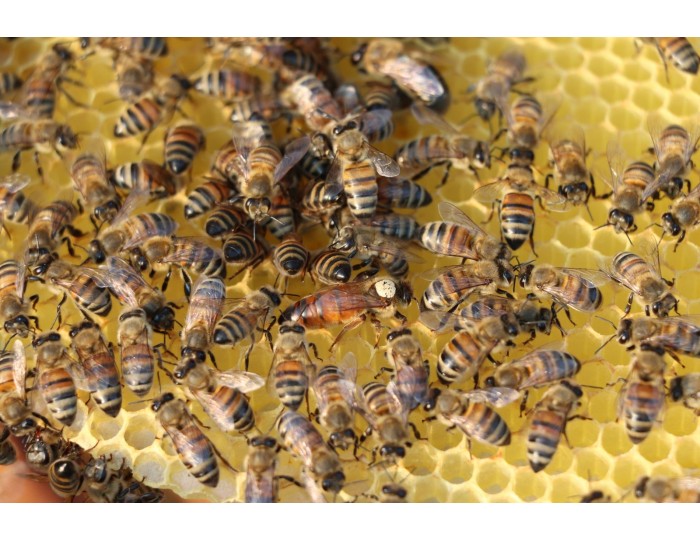
Three reasons, all of them practical. A dot of bright paint on the thorax turns a five-minute search through three boxes of bees into a glance at a frame. The colour tells you how old she is without opening a notebook. And if you find an unmarked laying queen in a colony that should have a marked one, you know immediately that the bees have superseded or swarmed, which changes what you do next.
The international colour code
The code runs on a five-year cycle keyed to the last digit of the year:
- White — years ending in 1 or 6
- Yellow — years ending in 2 or 7
- Red — years ending in 3 or 8
- Green — years ending in 4 or 9
- Blue — years ending in 5 or 0
The English-speaking mnemonic is "Will You Rear Good Bees": White, Yellow, Red, Green, Blue. A queen marked white was raised in 2026; a yellow queen in 2027. Because the cycle is five years and queens rarely head a colony for that long, the code is unambiguous in practice.
When to mark
Mark a young, mated, laying queen on a warm, calm day when the colony is working and not defensive. Avoid marking a virgin queen who still has mating flights ahead of her, and avoid handling a queen immediately before or after introducing her to a new colony — she will already be under enough stress and the risk of rejection goes up. Early morning on a cool day, with every bee at home and irritable, is the worst possible moment.
The technique
- Find her on a frame and work over the open hive, so that if she drops she falls back among her own bees rather than into the grass.
- Either press a marking cage gently over her against the comb and ease the plunger forward until she is held but not squeezed, or pick her up by the wings and transfer her to a cupped hand or a hair-clip catcher. Never grip the abdomen.
- Apply one small dot of paint to the top of the thorax — the plate between the wing bases. Nothing on the head, the eyes, the antennae, the wing roots, the abdomen or the sides of the body, where the spiracles are.
- Let the paint dry for roughly half a minute to a minute. Paint that is still wet will be groomed off by the workers, and worse, it can glue the queen to a bee or to the comb.
- Release her onto the same frame you took her from and watch for a moment. Workers should take no particular notice of her.
Why water-based paint markers
Beekeepers settled on water-based pigment markers such as POSCA for sound reasons. They are low-odour, so they do not carry the solvent smell that can trigger a colony to ball or reject a queen. The pigment is opaque and shows clearly on dark chitin, it dries quickly, and it does not run down the thorax while you wait. Solvent-based markers and nail varnish do the job too, but with a real risk of harming the queen or contaminating the comb, and they take longer to dry.
Two habits make a big difference. Shake the marker thoroughly and prime the tip on scrap paper or cardboard until the paint flows evenly, so that your first touch on the queen is not a blob. And choose a fine tip: a bullet tip around 0.9–1.3 mm gives a dot the right size for a queen's thorax, while the wider 1.8–2.5 mm tips are better suited to numbering hive bodies and dating frames. A dot that covers the whole thorax is not easier to see; it is more likely to be chewed off.
Numbered discs as an alternative
Opalith numbered discs glued to the thorax with a drop of shellac or special glue give you an individual identity as well as a year colour, which matters in a queen-rearing operation with many sisters. They need a steadier hand than a paint dot and the glue must be used sparingly, but for record-keeping they are hard to beat.
A note on the same markers elsewhere
The fine water-based markers that beekeepers buy for queens are the same ones that writers, model builders and FPV pilots use for labelling. If you build quadcopters as well as keeping bees, the same pen will date a filament spool, number a flight battery or mark the orientation of a motor on a frame. One fewer thing to buy twice.
Questions about colours, tip sizes or marking cages? Call +380 93 336 98 79 or write to [email protected].
Related Post
The Varroa Year: When to Count Mites and When to Treat